If you are choosing an antihistamine, you may as well choose one that targets cancer too. This goes for whether you want a natural compound or pharmaceutical antihistamine.
How do antihistamines work?
Antihistamines block the action of histamine. Histamine is a substance occurring in mast cells in the body. In an allergic reaction, it is one of the substances released which causes symptoms such as itching, sneezing, wheezing and runny nose and eyes.
A recent review article found that natural products primarily exert their effects by modulating signalling pathways such as NF-κB, MAPKs, STAT3/ROR-γt/Foxp3, and GATA3/T-bet, thereby inhibiting the activation and expansion of allergic inflammation 1.
All of these pathways (and more) are used and hijacked by cancer cells to thrive.
Five Natural compounds that have both antihistamine and anticancer properties.
Berberine
(Plant Alkaloid) In an in vivo model of allergic responses, administration of berberine inhibited passive cutaneous anaphylaxis in mice indicating berberine could suppress mast cell activation and allergic responses 2 .
CLICK HERE for drug/herb berberine interactions via Memorial Sloan Kettering Cancer Centre.
It can be bought as a supplement.
Epigallocatechin gallate/green tea (EGCG)
(Polyphenol) A recent rat study reported that the administration of EGCG led to a dose-dependent inhibition of proinflammatory cytokines and histamine concentrations, which implies strong suppression of degranulation of mast cells.
These findings indicate that EGCG has therapeutic promise in addressing the mast cell-based allergic diseases3 .
CLICK HERE for drug/herb green tea interactions via Memorial Sloan Kettering Cancer Centre.
Resveratrol
(Polyphenol) A placebo-controlled, double-blinded study of 150 adults with severe persistent allergic rhinitis found that resveratrol achieved a significant reduction in nasal symptoms compared to the placebo-treated group.
The resveratrol treatment significantly decreased the IgE, IL-4, TNF-α, and eosinophil levels in the blood 4. A study with mice showed that Reveratrol treatment attenuated sneezing and nasal rubbing in allergic rhinitis induced mice.
It decreased histamine release, OVA-specific IgE, IgG1, IL-4 and LTC4, inflammatory cell numbers (leucocytes, eosinophils, lymphocytes, and neutrophils), and inflammatory cytokines secretion (TNF-α, IL-6, IL-10, IL-5, IL-13, and IL-17) 5.
CLICK HERE for drug/herb resveratrol interactions via Memorial Sloan Kettering Cancer Centre.
Resveratrol is in grape skins and seeds, peanuts, pistachios, mulberries, blueberries, cranberries, Polygonum cuspidatum or Japanese knotweed and can be bought as a supplement.


Rosemarinic Acid
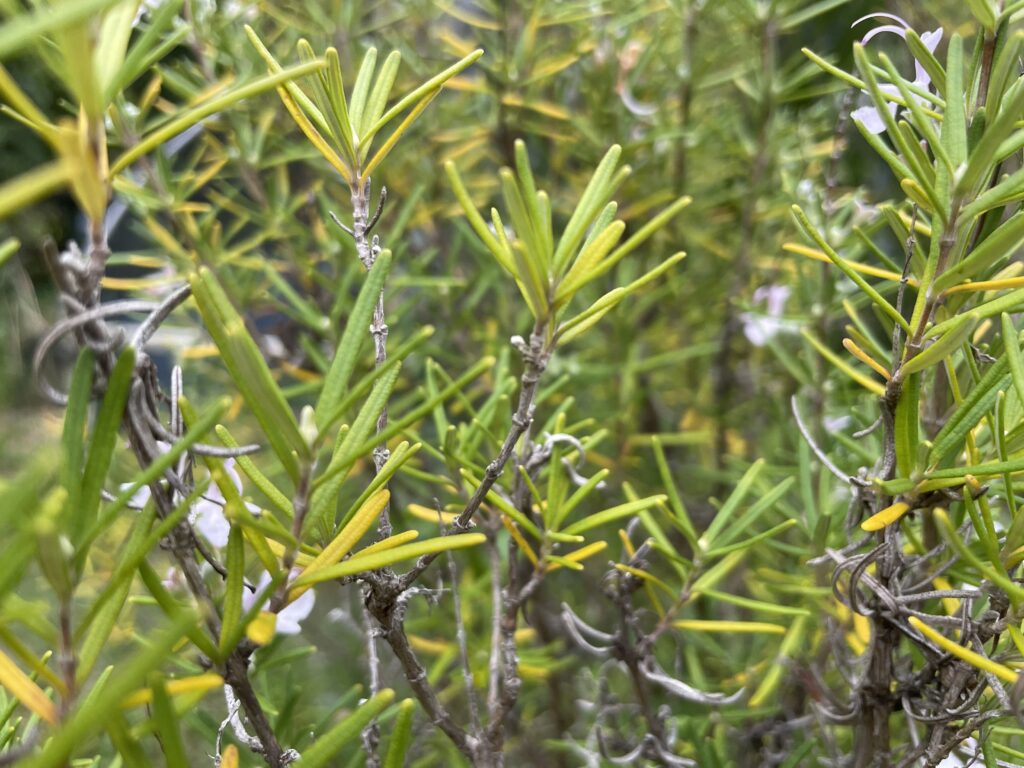
(Polyphenol) named after rosemary (Salvia rosmarinus Spenn.), is a polyphenol constituent of many culinary herbs, including rosemary (Salvia rosmarinus L.), perilla (Perilla frutescens L.), sage (Salvia officinalis L.), mint (Mentha arvense L.), and basil (Ocimum basilicum L.) Rosmarinic acid (RA).
It has been proven to exert anti anaphylaxis in atopic dermatitis, asthma, and allergic rhinitis.
Results of a mouse study found cytokine expression evaluation showed RA effectively enhanced the expression of anti-inflammatory cytokines (IL-10 and FOXP-3) in the liver of OVA-challenged mice.
Meanwhile, the elevation of pro-inflammatory cytokines (TNF-α, IL-4, IL-6, mMCP-1, and iNOS) were remarkably inhibited by RA.
The anti-oxidative and anti-inflammatory activities of RA potentially play vital roles in this process 6.
I find ground dried rosemary leaves are easy and tasty to add to roast vegetables and meats.

Quercetin
(Flavanoid) A recent review found Quercetin’s beneficial effects have been attributed to its anti-cancer, anti-viral, anti-oxidant, and anti-inflammatory activities, and also a decrease in pro-inflammatory cytokines, leukotrienes production, inhibition of histamine release, and suppression of interleukin IL-4 production.
It can reduce the production of antigen-specific IgE antibodies and improve the Th1/Th2 balance.
These qualities of quercetin can be used as a strategy to treat asthma, allergic rhinitis, atopic dermatitis, conjunctivitis, and anaphylaxis 7.
CLICK HERE for drug/herb quercetin interactions via Memorial Sloan Kettering Cancer Centre.
Quercetin is found in onions, apples, black tea, green tea, buckwheat tea, citrus fruits, red grapes, cherries, raspberries and can be bought as a supplement.


Pharmaceutical antihistamines that also have anticancer properties.
Antihistamines have been found to have anticancer properties and can also increase the effectiveness of immunotherapy. A review by Nagy et al published in 2025 8 found that,
“All articles found a significant improvement in overall survival rates and longer progression-free rates when antihistamines were added to immunotherapy regimens compared to patients who did not utilize antihistamines. Additionally, some studies also analyzed mortality rates, and each found a significant reduction in mortality rates when antihistamines were paired with immunotherapy.”
“There are two forms of antihistamines: first- and second-generation. First-generation is less utilized because it crosses the blood-brain barrier, leading to sedation and anticholinergic effects, while second-generation is preferred because it remains within the peripheral nervous system and has less sedating effects.8”
“There are four histamine receptors: H1, H2, H3, and H4. These histamine receptors have been found to modulate cell proliferation, invasion, inhibition of apoptosis, migration, and vascularization [29-31]. High histamine content has been found in different human tumors including melanoma, colon, and breast cancer. 8”
Narrowing it down further, because not just any antihistamine will do,
“Antihistamines are divided into cationic and non-cationic amphiphilic antihistamines. Cationic antihistamines have been found to have greater anticancer effects when compared to non-cationic amphiphilic antihistamines.8” These are defined by the chemical shape.
“Cationic antihistamines, including desloratadine, cyproheptadine, ebastine, loratadine, and astemizole, have been found to be associated with greater overall survival and longer progression-free survival when compared to non-cationic amphiphilic antihistamines [20,40].
Additionally, cationic antihistamines have been shown to have greater anticancer properties through modulating genes. They have recently been found to accumulate inside lysosomes due to their unique structure to rapidly increase the lysosomal pH, which elevates the efflux of hydrogen, leading to cancer cell apoptosis. It also enhances the inhibition of the STAT3 gene, causing tumor growth restriction [41] 8”.
Astemizole has been withdrawn in most countries due to high cardiotoxicity mainly from exceeding dosages.
Authors of a mouse study [41] 9 of cationic amphiphilic antihistamines CADs concluded that:
“The ability of CADs to potently inhibit the transcriptional activity of STAT3 is of particular interest because the strong clinical applicability and the repurposing potential of cationic amphiphilic antihistamines for cancer therapy might circumvent the dilemma that none of the conventional STAT3 inhibitors have passed stringent clinical trials.9 ”
If you are wondering, the relevance of suppressing STAT3 is,
“While STAT3 plays an essential role in homeostasis, its persistent activation has been implicated in the pathogenesis of various diseases, particularly cancer, bone‐related diseases, autoimmune disorders, inflammatory diseases, cardiovascular diseases, and neurodegenerative conditions.10 ” In other words, STAT3 is another signalling pathway that cancer cells use and hijack.
Cationic antihistamines include:
- Desloratadine
- Cyproheptadine
- Ebastine
- Loratadine
Examples of non-drowsy antihistamine active ingredients and common brand names (which may vary by location) include:
- Fexofenadine (Allegra, Telfast) This is considered the LEAST DROWSY
- Loratadine (Claritin, Claratyne)
- Desloratadine (Clarinex, Desonex)
- Cetirizine (Zyrtec, C-Zine)
Immunotherapy and High Histamine Levels
An in-depth mouse model study found a way antihistamines work to increase immunotherapy effectiveness is via the histamine and histamine receptor H1 (HRH1) which are frequently increased in the tumor microenvironment and induce T cell dysfunction 11.
“H1-antihistamines can restore T cell function suppressed by cancer cell-secreted and/or allergy-released histamine and improve the efficacy of immunotherapies such as immune checkpoint blockade therapies 11”. The authors found that “pre-existing allergy or high histamine levels in cancer patients can dampen immunotherapy responses.
Fexofenadine hydrochloride restores T cell function inhibited by cancer cell secreted histamine and improves response to immunotherapy.
“During allergic reactions, mast cell-released histamines activate HRH1, which triggers contraction of smooth muscles and increases capillary permeability, resulting in classic allergy symptoms”. In this study, they found that “melanoma and lung cancer patients taking H1-antihistamines during immunotherapy treatment exhibited improved clinical outcomes with statistical significance. Similar trends were also observed in immune checkpoint blockade treated breast and colon cancer”.
Some examples of immune checkpoint blockade drugs are:
- Cemiplimab (Libtayo)
- Nivolumab (Opdivo)
- Pembrolizumab (Keytruda)
- Atezolizumab (Tecentriq)
- Avelumab (Bavencio)
- Durvalumab (Imfinzi)
CLICK HERE for more information on antihistamines and side effects via the Cleveland Clinic.
- This Web site —Target Cancer Naturally.com is for general health information only. This Web site is not to be used as a substitute for medical advice, diagnosis or treatment of any health condition or problem. Users of this Web site should not rely on information provided on this Web site for their own health problems. Any questions regarding your own health should be addressed to your own physician or other healthcare provider.
- Target Cancer Naturally makes no warranties nor express or implied representations whatsoever regarding the accuracy, completeness, timeliness, comparative or controversial nature, or usefulness of any information contained or referenced on this Web site. Target Cancer Naturally does not assume any risk whatsoever for your use of this website or the information contained herein. Health-related information changes frequently and therefore information contained on this Web site may be outdated, incomplete or incorrect. Statements made about products have not been evaluated by the Food and Drug Administration. Use of this Web site does not create an expressed or implied physician-patient relationship.
- Target Cancer Naturally does not record specific website user information and does not contact users of this website. You are hereby advised to consult with a physician or other professional health-care provider prior to making any decisions, or undertaking any actions or not undertaking any actions related to any health care problem or issue you might have at any time, now or in the future. In using this website you agree that Target Cancer Naturally nor any other party is or will be liable or otherwise responsible for any decision made or any action taken or any action not taken due to your use of any information presented at this website.
References
1. Liu, T., et al. The potential application and molecular mechanisms of natural products in the treatment of allergic rhinitis: A review. Phytomedicine 129, 155663 (2024).
2. Fu, S., Ni, S., Wang, D., Fu, M. & Hong, T. Berberine suppresses mast cell-mediated allergic responses via regulating FcɛRI-mediated and MAPK signaling. Int. Immunopharmacol. 71, 1-6 (2019).
3. Islam, M.M., et al. Stabilizing effect of green tea extract and epigallocatechin-3-gallate (EGCG) on mast cell : an in vivo study. Inflammopharmacology 33, 4685-4701 (2025).
4. Lv, C., Zhang, Y. & Shen, L. Preliminary Clinical Effect Evaluation of Resveratrol in Adults with Allergic Rhinitis. Int. Arch. Allergy Immunol. 175, 231-236 (2018).
5. Li, J., et al. Resveratrol-mediated SIRT1 activation attenuates ovalbumin-induced allergic rhinitis in mice. Mol. Immunol. 122, 156-162 (2020).
6. Jia, B., et al. Hepatoprotective Effects of Rosmarinic Acid on Ovalbumin-Induced Intestinal Food Allergy Mouse Model. Molecules 28(2023).
7. Najaf Najafi, N., Armide, N., Akbari, A., Baradaran Rahimi, V. & Askari, V.R. Quercetin a promising functional food additive against allergic Diseases: A comprehensive and mechanistic review. J. Funct. Foods 116, 106152 (2024).
8. Nagy, S., Denis, O., Hussein, A. & Kesselman, M.M. The Impact of Antihistamines on Immunotherapy: A Systematic Review. Cureus 17, e79421 (2025).
9. Liu, B., et al. Cationic amphiphilic antihistamines inhibit STAT3 via Ca(2+)-dependent lysosomal H(+) efflux. Cell Rep. 42, 112137 (2023).
10. Samad, M.A., et al. STAT3 Signaling Pathway in Health and Disease. MedComm (2020) 6, e70152 (2025).
11. Li, H., et al. The allergy mediator histamine confers resistance to immunotherapy in cancer patients via activation of the macrophage histamine receptor H1. Cancer Cell 40, 36-52.e39 (2022).
**** ** ****